
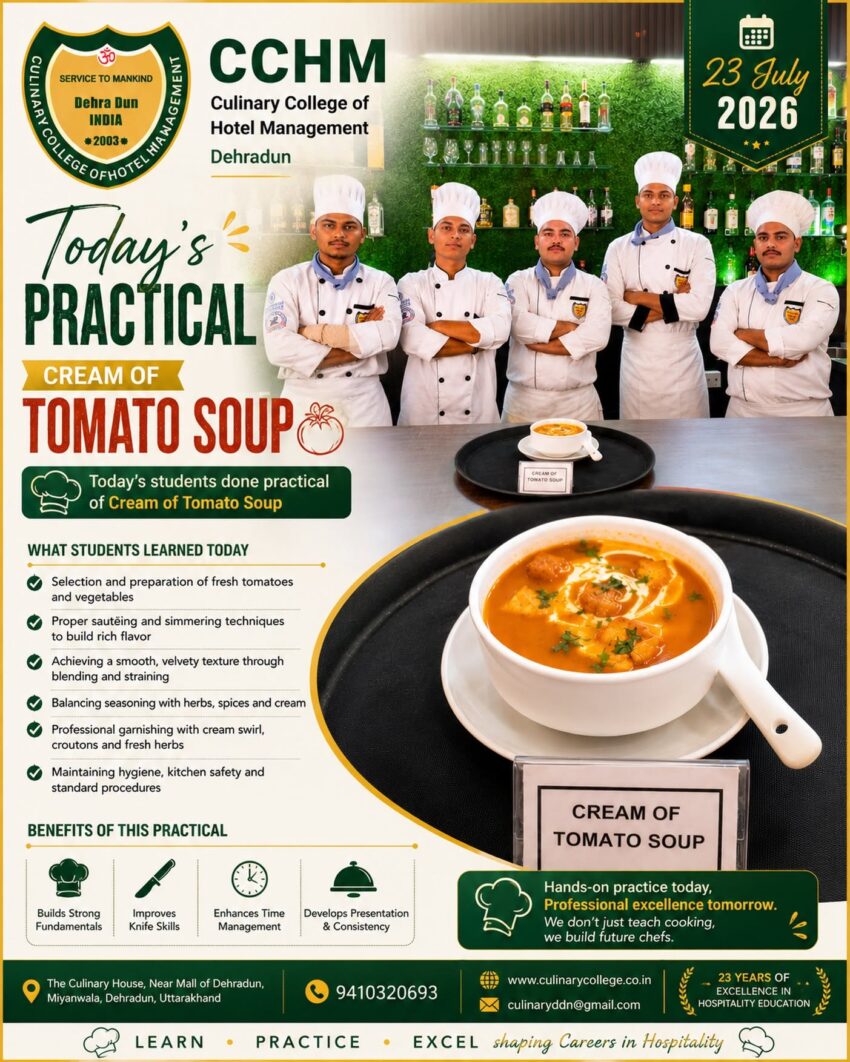
Cream of Tomato Soup Practical at Culinary College of Hotel Management (CCHM), Dehradun Hands-on Culinary Training That Builds Professional Chefs
Published Date: 23 July 2026
Category: Culinary Practical | Food Production | Diploma in Culinary Arts | Hotel Management
Cream of Tomato Soup Practical at CCHM Dehradun
At Culinary College of Hotel Management (CCHM), Dehradun, practical learning is at the heart of every culinary program. Our students don’t just read recipes—they prepare them in a professional kitchen under the guidance of experienced chef instructors.
On 23 July 2026, students of the Diploma in Culinary Arts and Diploma in Hotel Management successfully completed a practical session on Cream of Tomato Soup, one of the most important classical soups taught in professional kitchens worldwide.
This practical focused on developing essential culinary skills such as ingredient preparation, knife handling, soup-making techniques, seasoning, texture control, garnishing, plating, and professional kitchen hygiene.
Why Soup Practical Is Important for Every Culinary Student
Soup preparation is considered one of the fundamental skills in professional cooking. Every chef begins learning with stocks, soups, and sauces because they teach precision, patience, and balance of flavors.
During this practical session, students learned that a perfect soup is not simply boiling vegetables together—it is about understanding:
- Flavor extraction
- Cooking temperatures
- Proper consistency
- Colour retention
- Professional presentation
- Hygiene standards
Mastering soup preparation gives students a strong foundation before moving to advanced cuisines like Continental, Italian, French, and International cuisine.
What is Cream of Tomato Soup?
Cream of Tomato Soup is a classic Continental soup prepared using fresh tomatoes, onions, butter, herbs, vegetable stock, cream, and seasonings.
The soup is known for:
- Smooth texture
- Rich tomato flavour
- Bright natural colour
- Creamy consistency
- Balanced acidity
- Elegant presentation
It is one of the most popular soups served in luxury hotels, fine dining restaurants, cruise ships, airlines, cafés, and international hospitality establishments.
Objectives of the Practical
The practical session was designed to help students understand every stage involved in professional soup preparation.
Students were trained to:
- Select fresh tomatoes
- Wash and prepare vegetables correctly
- Practice safe knife skills
- Prepare soup base professionally
- Cook ingredients at correct temperatures
- Blend and strain the soup
- Adjust seasoning professionally
- Finish with cream
- Garnish beautifully
- Serve according to hotel standards
Ingredients Used During Practical
Students worked with fresh ingredients including:
- Fresh ripe tomatoes
- Onion
- Garlic
- Butter
- Refined flour (for light thickening where required)
- Vegetable stock
- Salt
- White pepper
- Sugar (to balance acidity)
- Fresh cream
- Fresh coriander or parsley
- Bread croutons
The emphasis was placed on using quality ingredients because great dishes always begin with quality raw materials.
Practical Learning Process
1. Ingredient Selection
Students first inspected the tomatoes for freshness, colour, ripeness, and quality.
Chef instructors explained how selecting poor-quality ingredients affects the final taste and appearance of the soup.
2. Washing and Preparation
Students washed vegetables properly following food safety guidelines.
They learned:
- Cross contamination prevention
- Personal hygiene
- Vegetable cleaning techniques
- Safe workstation preparation
3. Knife Skills
Before cooking began, students practiced:
- Onion slicing
- Tomato cutting
- Garlic chopping
Knife handling is an important competency for every professional chef.
4. Cooking the Base
Students sautéed onions and garlic gently in butter without browning.
This step taught them how to build flavour while maintaining the natural sweetness of vegetables.
5. Simmering
Fresh tomatoes were added and slowly cooked with vegetable stock.
Chef instructors explained why slow simmering helps develop better flavour compared to rapid boiling.
Students also learned:
- Temperature control
- Moisture retention
- Aroma development
6. Blending
Once cooked, the soup was blended into a smooth consistency.
Students observed the importance of:
- Correct blending time
- Safe handling of hot liquids
- Texture control
7. Straining
The soup was strained using professional techniques to achieve a silky smooth texture suitable for fine dining restaurants.
Students learned that presentation begins with consistency.
8. Final Seasoning
After blending, seasoning was adjusted carefully.
Students balanced:
- Salt
- White pepper
- Sugar
- Fresh cream
Chef instructors emphasized that seasoning should enhance natural flavours rather than overpower them.
9. Garnishing
Students completed the soup using:
- Fresh cream swirl
- Golden croutons
- Fresh herbs
They learned that garnishing improves:
- Visual appeal
- Texture contrast
- Guest experience
10. Professional Presentation
Every bowl was presented following hotel standards.
Students focused on:
- Clean bowls
- Correct portion size
- Attractive plating
- Consistent presentation
Professional presentation is one of the key expectations in hotels, resorts, and cruise lines.
Skills Developed During the Practical
By the end of the session, students improved several important culinary competencies:
Knife Skills
Students handled professional knives safely while preparing vegetables.
Time Management
Each preparation stage was completed within allocated kitchen timings.
Teamwork
Students worked together efficiently, similar to a professional hotel kitchen brigade.
Hygiene
Proper sanitation practices were followed throughout the practical.
Students learned:
- Hand washing
- Sanitizing equipment
- Clean workstations
- Safe food handling
Communication
Kitchen communication was encouraged to improve coordination during cooking.
Presentation Skills
Students gained confidence in presenting dishes suitable for hotel service.
Importance of Practical Learning at CCHM
At Culinary College of Hotel Management, Dehradun, we strongly believe that culinary education cannot be learned only through books.
Our programs emphasize:
- 80% Practical Training
- Professional Kitchen Environment
- Individual Student Attention
- Live Demonstrations
- Industry Standards
- Skill-Based Learning
This approach prepares students for successful careers in:
- Five-Star Hotels
- Luxury Resorts
- Cruise Lines
- Restaurants
- Airlines
- Catering Companies
- International Hospitality Industry
Why Students Love Practical Classes
Students enjoy practical sessions because they receive real kitchen exposure.
Benefits include:
- Learning by doing
- Confidence building
- Better understanding
- Creativity development
- Professional discipline
- Team coordination
Practical classes also prepare students for industrial training and placements.
Chef Instructor Guidance
Throughout the session, experienced chef faculty supervised every student.
Individual feedback was provided on:
- Knife work
- Soup consistency
- Taste balance
- Hygiene
- Presentation
- Kitchen organization
This personalized attention helps students improve continuously.
Industry-Oriented Training
Every practical conducted at CCHM follows industry standards.
Students are trained according to procedures used in:
- International Hotels
- Luxury Restaurants
- Cruise Kitchens
- Fine Dining Establishments
This practical exposure significantly increases employability after course completion.
Career Opportunities After Learning Culinary Skills
Students mastering professional food production can build careers as:
- Commis Chef
- Demi Chef
- Chef de Partie
- Soup Chef
- Continental Chef
- Executive Chef (with experience)
- Cruise Chef
- Resort Chef
- Catering Professional
- Entrepreneur
Professional culinary skills are in demand both in India and internationally.
Why Choose Culinary College of Hotel Management (CCHM), Dehradun?
Since 2003, CCHM has been committed to producing skilled hospitality professionals through practical-based education.
Our Highlights
- Established Since 2003
- One of the Oldest Hotel Management Colleges in Dehradun
- 80% Practical Training
- Experienced Chef Faculty
- Small Batch Size
- Modern Training Kitchens
- Industry-Oriented Curriculum
- India & Abroad Placement Assistance
- International Internship Opportunities
- Personality Development & Communication Training
Admissions Open for 2026–27
If you dream of becoming a professional chef or building a successful career in the hospitality industry, CCHM offers the right environment to learn and grow.
Courses Offered
- Diploma in Culinary Arts
- Diploma in Hotel Management
- Bakery & Patisserie
- Bar Management & Bartending
Contact Us
Culinary College of Hotel Management (CCHM), Dehradun
📍 Near Mall of Dehradun, Miyanwala, Haridwar Road, Dehradun, Uttarakhand
📞 9410320693
Conclusion
The Cream of Tomato Soup Practical conducted on 23 July 2026 was another successful step in helping students transform classroom knowledge into professional culinary skills. From selecting fresh ingredients to presenting a perfectly garnished bowl of soup, every stage of the session reflected the practical-first philosophy of Culinary College of Hotel Management (CCHM), Dehradun.
By consistently engaging in real kitchen training, our students gain the confidence, discipline, and technical expertise required to excel in hotels, restaurants, resorts, cruise lines, and international hospitality organizations. At CCHM, every practical class is more than a recipe—it is preparation for a successful culinary career.